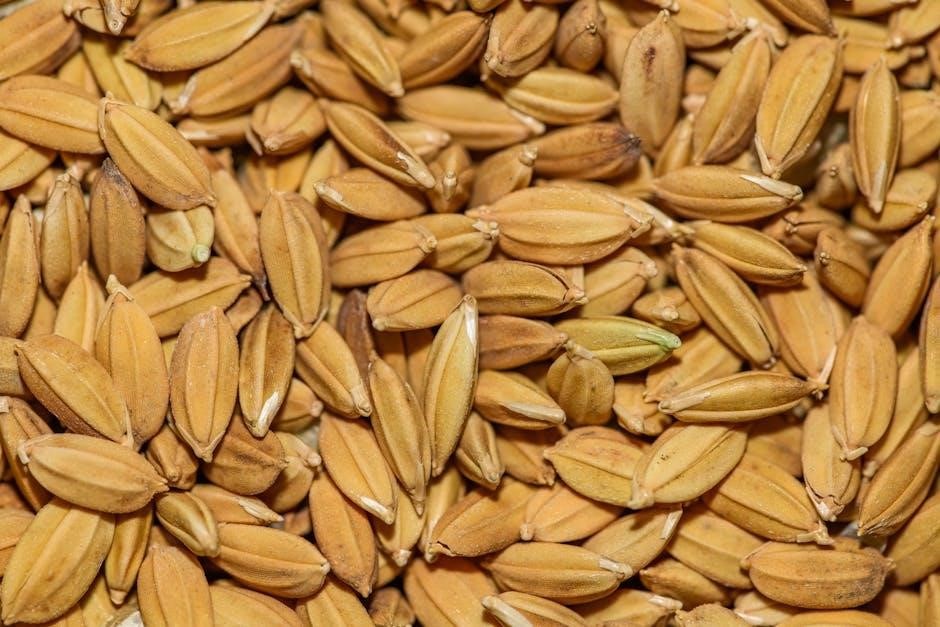
Brown rice offers a nutty flavor and chewy texture‚ requiring slightly longer cooking times than white rice. Mastering the process yields a wholesome‚ delicious grain‚ perfect for various dishes.
What is Brown Rice?
Brown rice is a whole grain‚ meaning it retains the bran and germ layers. These layers are removed to make white rice‚ but they’re packed with fiber‚ vitamins‚ and minerals. This gives brown rice a slightly nutty flavor and chewier texture. It’s a staple food for many cultures and a healthier alternative to its refined counterpart‚ offering substantial nutritional benefits. Simply Nature brown rice retains these vital components‚ ensuring a wholesome culinary experience.
Why Choose Brown Rice?
Choosing brown rice over white rice provides a significant nutritional boost. It’s richer in fiber‚ aiding digestion and promoting fullness. Brown rice also contains essential vitamins like B vitamins and minerals such as magnesium and selenium. This makes it a heart-healthy option‚ potentially lowering cholesterol levels. Simply Nature’s brown rice offers these benefits without compromising on taste‚ supporting a balanced and nutritious diet for a healthier lifestyle.

Understanding Brown Rice Varieties
Different brown rice types—long‚ short‚ and parboiled—vary in texture‚ cooking time‚ and flavor profiles‚ impacting the final dish’s characteristics and suitability.
Long Grain Brown Rice
Long grain brown rice‚ like Basmati‚ remains fluffy and separate when cooked‚ making it ideal for pilafs‚ salads‚ or as a side dish. Its grains elongate during cooking‚ offering a distinct texture. Typically‚ it requires around 45-50 minutes of simmering. A 1.75:1 water ratio is generally recommended‚ though adjustments may be needed based on altitude and desired tenderness. This variety holds its shape well and absorbs flavors beautifully‚ creating a versatile base for numerous culinary creations.
Short Grain Brown Rice
Short grain brown rice possesses a higher starch content‚ resulting in a stickier‚ more tender texture. This makes it excellent for dishes like sushi‚ risotto‚ or creamy rice puddings. It generally requires a slightly shorter cooking time‚ around 40-45 minutes‚ and a similar water ratio of 1.75:1. Due to its stickiness‚ rinsing before cooking isn’t always necessary‚ but can help remove excess starch. Expect a chewier bite compared to its long-grain counterpart.
Parboiled Brown Rice
Parboiled brown rice‚ also known as converted rice‚ undergoes a steaming process before milling‚ driving nutrients into the kernel. This results in a firmer texture and shorter cooking time – typically 30-35 minutes. It’s less likely to become mushy and retains more nutritional value. The water ratio remains around 1.75:1‚ but some adjustments may be needed based on desired consistency. It’s a convenient option for consistent results.

Essential Brown Rice to Water Ratio
Achieving fluffy brown rice hinges on the correct ratio: generally 1.75 cups of water for every 1 cup of rice‚ ensuring even cooking and optimal texture.
Standard Ratio: 1.75 Cups Water to 1 Cup Rice
For consistently perfect results‚ a 1.75:1 water-to-rice ratio is your starting point; This means for every cup of brown rice‚ use 1.75 cups of water. This proportion allows the rice to absorb sufficient liquid during simmering‚ resulting in a tender‚ yet slightly chewy texture. Remember‚ this is a guideline; slight adjustments may be needed based on your specific stove and pot. Precise measurement is key to avoiding mushy or undercooked rice‚ ensuring a delightful side dish every time.
Adjusting for Different Varieties
Brown rice isn’t one-size-fits-all; varieties impact cooking. Quick-cooking‚ parboiled‚ or sprouted brown rice require less water – try a 1.5:1 ratio. Long-grain types generally need the standard 1.75:1‚ while shorter grains might benefit from slightly more liquid‚ around 1.8:1. Observe the rice during cooking; if it dries out too quickly‚ add a tablespoon or two of water. Experimentation is key to finding the perfect ratio for your preferred type and achieving ideal texture.
Cooking Brown Rice on the Stovetop
Stovetop cooking provides excellent control. Bring water and rice to a boil‚ then reduce heat‚ cover‚ and simmer for 45-50 minutes until tender.
Step-by-Step Stovetop Instructions
Begin by rinsing one cup of brown rice under cold water until the water runs clear. In a medium saucepan‚ combine the rinsed rice with 1.75 cups of water (or broth for added flavor). Bring the mixture to a rolling boil over high heat. Once boiling‚ immediately reduce the heat to low‚ cover the saucepan tightly‚ and simmer for 45-50 minutes.
Avoid lifting the lid during simmering to maintain consistent steam. After the simmering time‚ remove the saucepan from the heat and let it stand‚ covered‚ for 10 minutes. This resting period allows the rice to finish steaming and become perfectly fluffy. Finally‚ fluff with a fork before serving.
Simmering and Resting Time
Maintaining a low simmer for 45-50 minutes is crucial for properly cooking brown rice. This gentle heat allows the grains to absorb water and become tender without scorching. Resist the urge to peek! Lifting the lid releases steam and prolongs cooking.
The 10-minute resting period after simmering is equally important. It allows the residual heat to evenly distribute‚ completing the cooking process and resulting in fluffy‚ separate grains. This step prevents a sticky or undercooked texture.
Baking Brown Rice in the Oven
Oven baking provides a hands-off method for cooking brown rice‚ resulting in evenly cooked‚ fluffy grains with minimal attention needed during the process.
Oven Temperature and Baking Time
For oven-baked brown rice‚ preheat your oven to 375°F (190°C). Combine the rice and water (typically a 2:1 ratio‚ though adjustments may be needed – see other sections) in a baking dish with a tight-fitting lid. Cover securely and bake for 60-75 minutes‚ or until all the water is absorbed and the rice is tender.
Avoid lifting the lid during baking to maintain steam. Let the rice rest‚ covered‚ for 10 minutes before fluffing with a fork and serving.
Benefits of Oven-Baked Brown Rice
Oven baking offers a hands-off approach to cooking brown rice‚ minimizing the risk of sticking or burning. The consistent‚ gentle heat results in evenly cooked‚ fluffy grains. This method is ideal for larger quantities‚ freeing up stovetop space.
Baking also enhances the nutty flavor of brown rice‚ creating a more aromatic and satisfying dish. It’s a convenient option for meal prepping or side dish preparation.

Using a Rice Cooker for Brown Rice
Rice cookers simplify brown rice preparation‚ offering a convenient‚ automated cooking process with consistent results and minimal effort for the user.
Rice Cooker Settings for Brown Rice
Most rice cookers feature a dedicated “Brown Rice” setting‚ optimizing temperature and timing for perfect results. If unavailable‚ utilize the “Long Grain” or “Whole Grain” options. Ensure the cooker is clean and properly calibrated. Typically‚ a 1:1.75 rice-to-water ratio works well‚ but consult your cooker’s manual for specific recommendations. Allow for a natural resting period of 10-15 minutes after cooking completes‚ enhancing texture and fluffiness. Experiment slightly to find your ideal consistency.
Advantages of Using a Rice Cooker
Rice cookers offer unparalleled convenience and consistency when preparing brown rice. They eliminate the guesswork of stovetop cooking‚ preventing burning or undercooking. Automatic settings and keep-warm functions ensure perfectly cooked rice is always ready. Minimal monitoring is required‚ freeing up your time for other tasks. Cleanup is also simplified with non-stick inner pots. For consistently fluffy and flavorful brown rice‚ a rice cooker is an excellent investment.
Troubleshooting Common Issues
Hard rice needs more water or longer cooking; mushy rice requires less liquid and a shorter simmer time. Adjust accordingly for perfect results!
Brown Rice is Too Hard
If your brown rice remains stubbornly hard after the initial cooking time‚ don’t despair! This usually indicates insufficient water absorption. Add an additional ¼ to ½ cup of hot water to the pot‚ then re-cover and simmer for another 10-15 minutes.
Ensure the heat is on low to prevent scorching. If it still resists softening‚ a longer simmering period – up to 20 minutes more – might be necessary. Remember to let it rest‚ covered‚ for 10 minutes after cooking!
Brown Rice is Mushy
Experiencing mushy brown rice? This typically means too much water was used during cooking. Unfortunately‚ reversing this is difficult. Next time‚ carefully measure the water-to-rice ratio – a standard is 1.75 cups water per 1 cup rice.
For a slight improvement‚ gently spread the cooked rice on a baking sheet and briefly bake at a low temperature (around 200°F) to evaporate some excess moisture. Prevention is key for perfectly textured brown rice!
Flavor Enhancements for Brown Rice
Elevate your brown rice by substituting water with flavorful broth! Season with herbs‚ spices‚ or a bay leaf during cooking for added depth.
Adding Broth Instead of Water
Substituting water with broth dramatically enhances the flavor profile of your brown rice. Chicken‚ vegetable‚ or even beef broth imparts a savory richness that complements the nutty notes of the grain. Use the same amount of broth as you would water‚ maintaining the appropriate rice-to-liquid ratio.
For a more intense flavor‚ consider using homemade broth or a high-quality store-bought variety. Experiment with different broth types to discover your preferred taste combination‚ creating a truly delicious and aromatic side dish.
Seasoning Options
Elevate your brown rice beyond simple cooking with a variety of seasonings! A pinch of salt is essential‚ but don’t stop there. Herbs like bay leaf‚ thyme‚ or rosemary infuse subtle aromas during cooking. Spices such as turmeric‚ cumin‚ or garlic powder add warmth and depth.
Consider a dash of soy sauce or a swirl of olive oil post-cooking for extra flavor. Experiment to find your perfect blend‚ transforming plain brown rice into a flavorful accompaniment to any meal.
Storing Cooked Brown Rice
Proper storage maintains quality. Refrigerate cooled rice in airtight containers for up to four days. For longer storage‚ freeze portions for up to six months.
Refrigeration Guidelines
To ensure food safety and optimal flavor‚ promptly cool cooked brown rice before refrigeration. Spread it thinly on a baking sheet to expedite cooling‚ then transfer to airtight containers. Refrigerated cooked brown rice maintains its quality for approximately four days. Always check for any off-odors or changes in texture before consuming. Proper refrigeration inhibits bacterial growth‚ preserving the rice’s freshness and nutritional value. Discard any rice that appears questionable to avoid potential illness.
Freezing Cooked Brown Rice
For longer storage‚ freezing cooked brown rice is an excellent option. Allow the rice to cool completely‚ then portion it into freezer-safe containers or bags‚ removing as much air as possible. Properly frozen‚ cooked brown rice can maintain good quality for up to six months. When reheating‚ add a splash of water to restore moisture. Freezing preserves the rice’s texture and nutritional content‚ offering a convenient meal component later on.

Nutritional Benefits of Brown Rice
Brown rice is a nutritional powerhouse‚ boasting essential vitamins‚ minerals‚ and fiber‚ contributing to overall health and well-being with each serving.
Vitamins and Minerals
Brown rice is a significant source of manganese‚ crucial for bone health‚ metabolism‚ and antioxidant defense. It also provides magnesium‚ supporting nerve and muscle function‚ alongside selenium‚ vital for thyroid hormone production.
Furthermore‚ brown rice contains B vitamins like niacin‚ thiamin‚ and vitamin B6‚ essential for energy production and nervous system health. These nutrients contribute to a well-rounded dietary intake‚ promoting overall vitality and supporting various bodily functions.
Fiber Content
Brown rice boasts a notably high fiber content‚ particularly insoluble fiber‚ which aids digestion and promotes gut health. This fiber contributes to feelings of fullness‚ potentially assisting with weight management and regulating blood sugar levels.
A single serving provides a substantial portion of the daily recommended fiber intake‚ supporting a healthy digestive system and reducing the risk of chronic diseases. This makes brown rice a valuable addition to a balanced diet.
Comparing Brown Rice to White Rice
Brown rice retains its bran and germ‚ offering more nutrients and fiber than white rice‚ which has these layers removed during processing.
Nutritional Differences
Brown rice significantly surpasses white rice in nutritional value due to the intact bran and germ layers. It’s a richer source of fiber‚ magnesium‚ selenium‚ and B vitamins. These components contribute to improved digestion‚ heart health‚ and sustained energy levels. White rice‚ while easily digestible‚ lacks these crucial nutrients‚ offering primarily carbohydrates. Choosing brown rice supports a more balanced and nutrient-dense diet‚ promoting overall well-being and providing essential elements for optimal bodily functions.
Texture and Taste Comparison
Brown rice boasts a noticeably chewier texture compared to the soft‚ fluffy consistency of white rice. Its flavor profile is nuttier and earthier‚ offering a more complex taste experience. While white rice is relatively neutral‚ brown rice provides a subtle depth that complements various cuisines. Some perceive brown rice as slightly heartier‚ making it a satisfying base for meals‚ while white rice is often favored for its delicate palate.